Key Elements of High-Converting Ecommerce Product Page
For every online store owner, there once comes a time when their sales hit the ceiling and simply can’t grow that fast anymore. What to do?
Well, you can constantly boost your advertising budget and utilize new promotion channels. Plus, you can use internal reserves, such as optimizing the product page, which will, in turn, increase the conversion rate. Sometimes a slight increase in the conversion rate by only a few percent can stimulate the explosive growth of your e-commerce business.
In today's highly competitive e-commerce environment, it's not enough to just have a great product. One needs to know how to sell, upsell, and cross-sell. This is usually achieved by creating a product page that will encourage visitors to make a purchase.
To do this, you need to focus on e-commerce conversion rate optimization and make sure that your product pages are structured and optimized in a way that allows you to achieve maximum engagement with your target audience. As a result, your sales grow and so does the average check.
The key elements that play a critical role in boosting conversions are:
- product images
- description
- price
- product video
- user-generated content and testimonials.
Here in this article, we’ll talk about the main elements of a high-converting product page and share some tips on how to increase sales of your online store. Also, don't forget to check out our recent article about AI in eCommerce, where we explain how AI solutions can increase the conversion rate and cross-selling opportunities.
Why eCommerce Product Page Conversion Optimization is So Important
When it comes to running a successful online store, product page optimization is crucial.
Product page conversion rate is the percentage of visitors who make a purchase after visiting a product page.
It’s very important to optimize this particular metric as it directly affects the overall e-commerce conversion optimization. Let's see how it works using a real example.
Let’s say your online store generates a steady number of 20 sales per day, with an average check of $400. Daily income will be $8,000 or $240,000 per month.
After you optimized the product page, there’s been a 2% increase in conversions, which leads to an additional $4,800 per month or a staggering +$57,000 per year (to what you’ve already been making). Impressive, huh? Plus, you didn’t have to increase your spending on advertising.
Is this really possible in real life? Of course, it is, and we’ll show you how in just a few seconds.
Product pages are the key points where customers decide whether to make a purchase or not. Customers want to know everything about a product before spending money, and product pages should provide visitors with all the information they need.
By improving the structure and content of their product pages (along with the design and usability), companies can:
- come up with successful strategies based on reliable information about the target audience;
- increase traffic to their online store and turn visitors into buyers;
- improve the quality of their website and interaction with the target audience;
- increase sales and reduce the need for increased paid advertising budgets;
- create more targeted, effective and profitable advertising campaigns;
- increase confidence in their own brand and get a higher ranking in search engines;
- enable sales and average check growth, which leads to an increase in revenue.
By implementing the proper strategies and constantly testing and improving your product pages, you will achieve a higher conversion rate and, as a result, make your business succeed.
What Are the Elements of a Well-Converting eCommerce Product Page?
To make it easier for you to navigate, we at Zwebra have compiled a list of 3 main elements of product pages that convert:
- The first screen should contain product image and key benefit
This section is critical to getting the attention of your potential customers. It should include a high-quality product image, product name, and key benefits that highlight what makes your product unique. Thanks to this, visitors will be able to quickly understand what your product is and why they should buy it.
eCommerce product page design is also important for a seamless user experience. Your product details page design should be easy to navigate, with clear calls to action and a simple checkout process. Make sure your page is optimized for mobile as most people shop on their smartphones.
- Additional visuals and descriptions to tell the full story of your product
It's also important to provide additional images and descriptions that tell the full story of your product. This section may include several images of the product from different angles, (possibly a schematic image of the product with its dimensions), a demonstration of your product in use (for example, a video instruction) and a detailed description of the product explaining the functions and benefits of your product.
This section should give your customers a clear idea of what they can expect from your product and how it can improve their lives.
- Reviews from customers to provide social proof of your product's quality
Reviews are a powerful tool for building trust and providing “real” proof of your product's quality. Placing testimonials on your product page can help potential customers feel more confident in their purchasing decision, as they can see the real experience of other people who have already bought and used your product.
Be sure to turn on the display of positive and negative reviews, as this can add authenticity to your page and show that you value honest feedback from your customers and can respond in a timely manner if customers find any shortcomings in a product or service.
By implementing all these elements and optimizing the page design, you can increase conversions and increase sales of your online store.
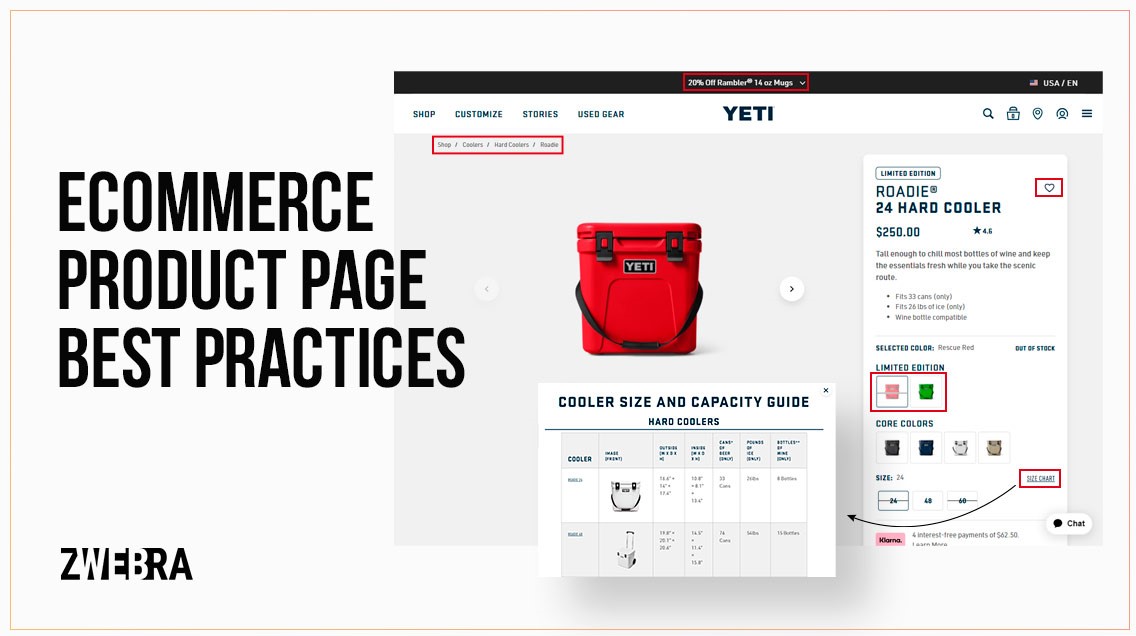
eCommerce Product Page Best Practices
Would you like to create the best e-commerce product page that will increase conversions and drive sales?
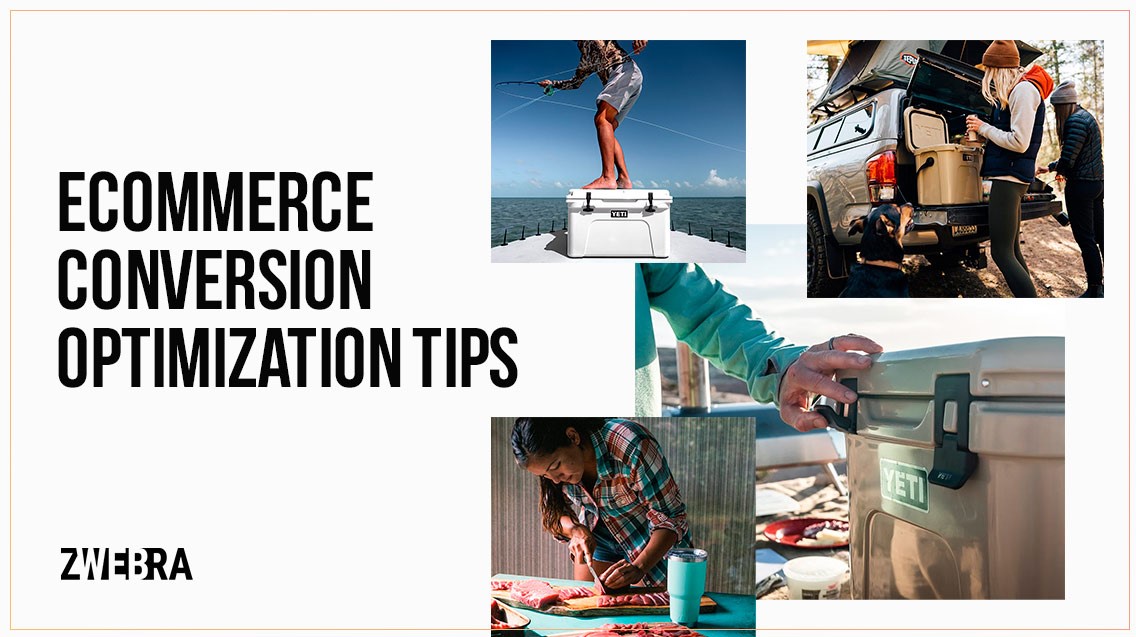
We at Zwebra have prepared a bunch of tried-and-true e-commerce conversion optimization tips used by Yeti, a company that offers high-quality gear and accessories for outdoor activities.
Their high-converting product pages are somewhat of a benchmark, as they feature all the content elements that affect sales, and are also aimed at increasing the sales receipt due to the upsell of related products.
Let’s take a closer look at their product page best practices:
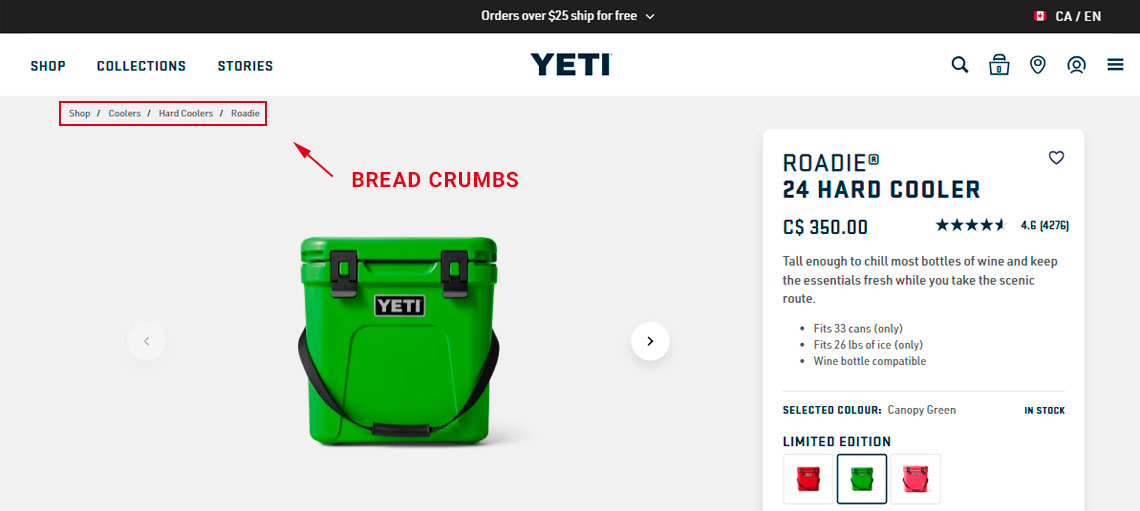
- Breadcrumbs
Breadcrumbs reduce the number of clicks required to navigate to a certain category/subcategory page. This is especially important for ease of navigation on mobile devices and also works as a cross-linking tool in terms of SEO.
For breadcrumbs, use clear and concise phrases and make sure they are prominently displayed on the page.
- Images
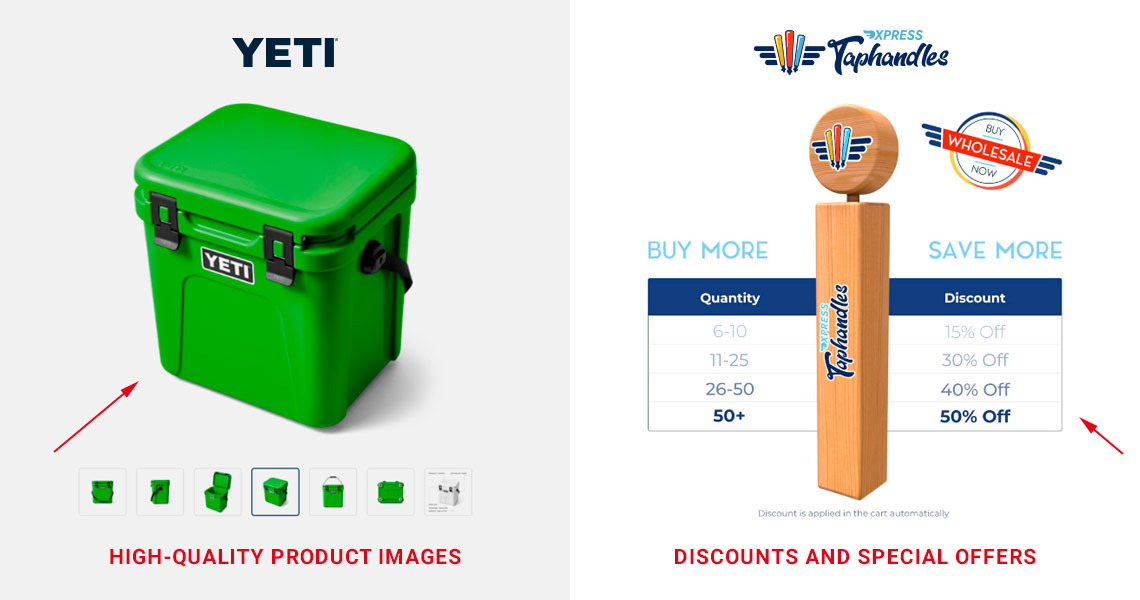
High-quality product images shot from different angles allow you to showcase your product in the most appealing way: they make it easier to understand the product size/dimensions, see additional elements, and emphasize its best features.
Product images can also contain information about discounts and special offers.
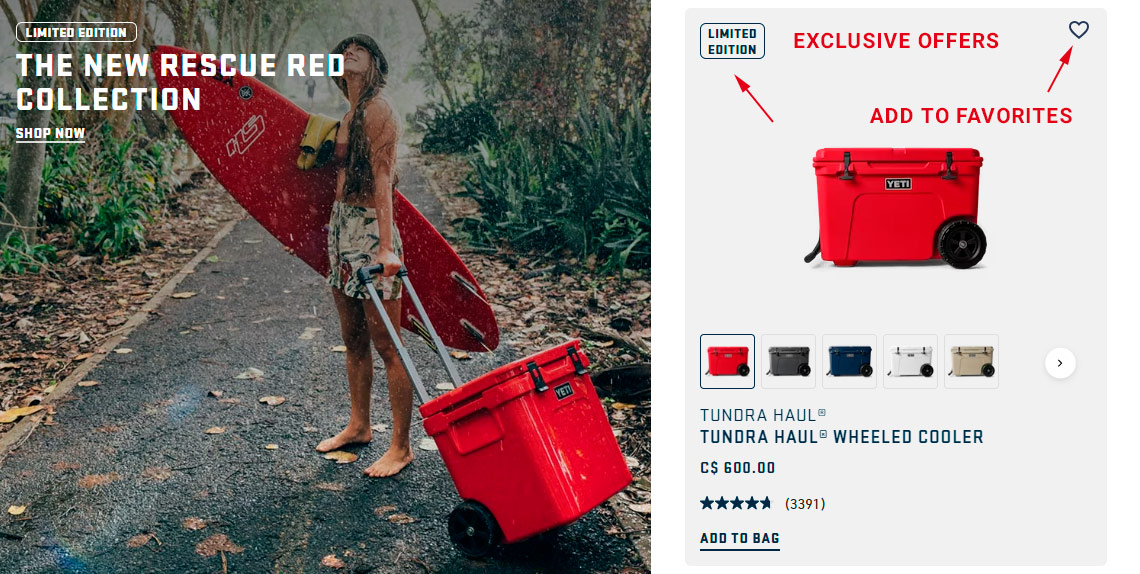
- Icons with special offers
These elements allow you to entice site visitors with an exclusive, one-time, limited deal.
- Add to favorites
This simple tool allows your site visitors to save the product they like and quickly return to it the next time they visit your website.
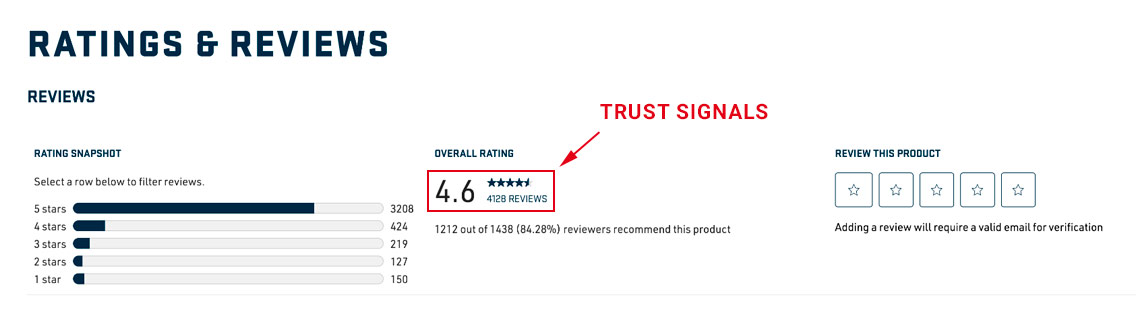
- Add Trust Signals
Product rating should be shown in the subcategory as well. People intuitively trust a product someone else has had a positive experience with.
Also, if a person clicks on the product rating, the page should scroll down to where your buyer reviews are located.
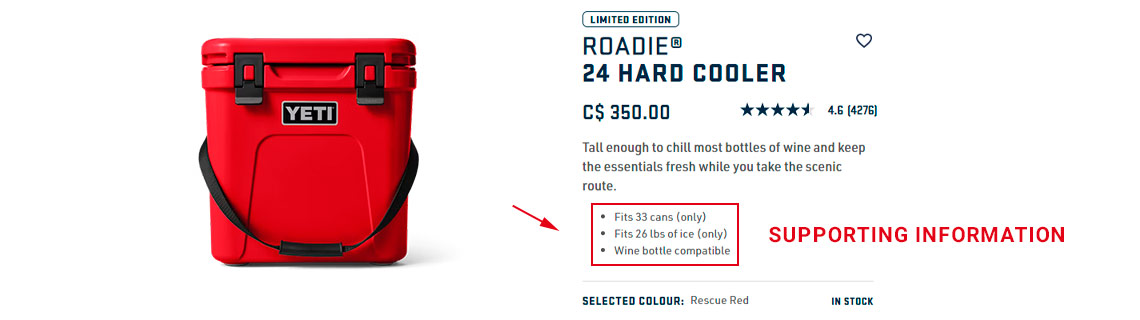
- Supporting information
This could be instructions, technical specifications, or some other information that will give the potential buyers a clear idea of what a product is and how to use it.
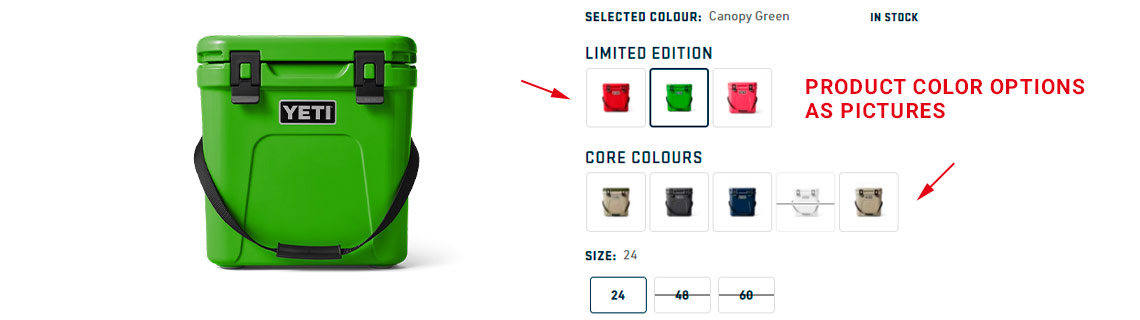
- Product color options as pictures
This simple tool makes it easy to show the range of colors and helps customers to understand what the product will look like in a particular color.
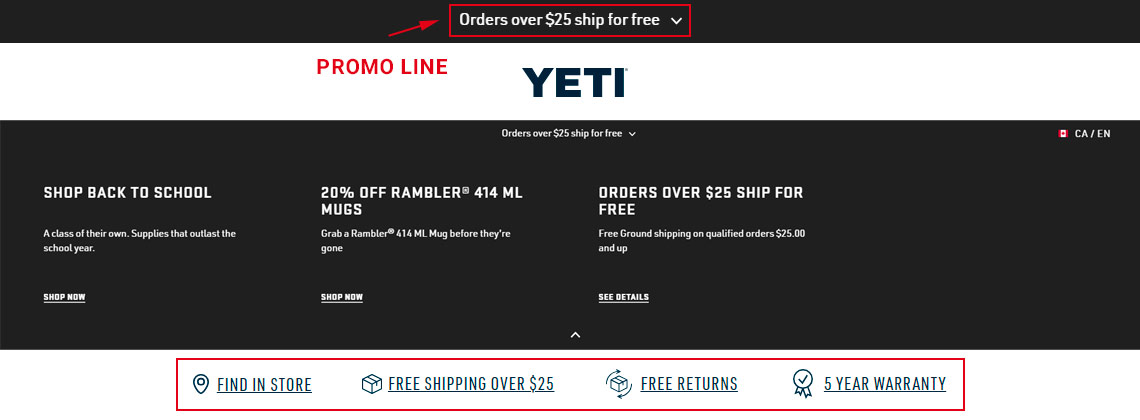
- Promo line
As a rule, this is a short marketing offer with information about the product, discounts, and other special offers.
A small promo line makes it possible to briefly remind the visitors about the advantages of shopping at your particular store, and terms of delivery, as well as suggest the nearest offline store (if applicable).
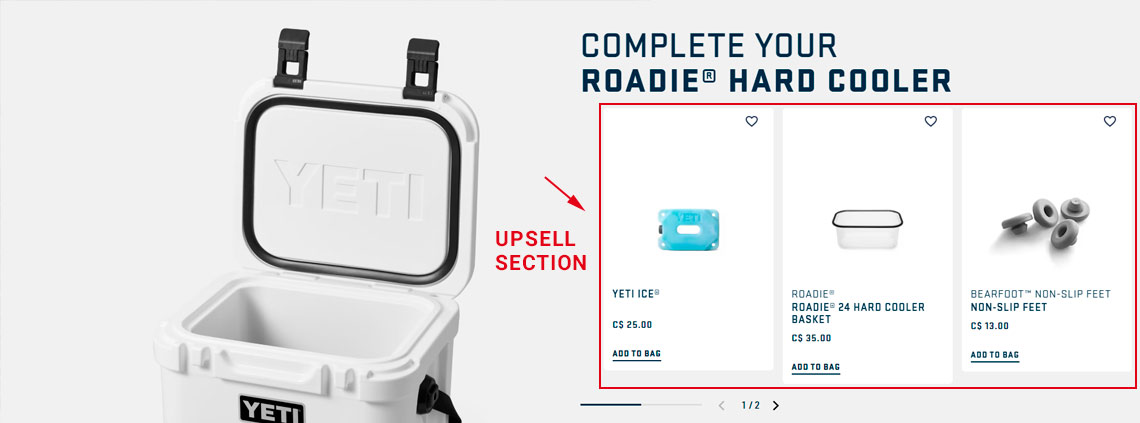
- Upsell section
This is a great opportunity to offer the buyer additional, similar products to what they’re already buying. If a person is already placing an order on your website, they might be interested in some other products that complement or supplement the product they’re currently ordering.
Naturally, it’s important to show only relevant products in the upsell block (e.g., accessories).
- Video
A professional promotional video is guaranteed to increase conversions, as it allows your customers to see the product in action, and evaluate its quality, size, and functionality. You can also film a video that shows how to use a product, highlighting its benefits.

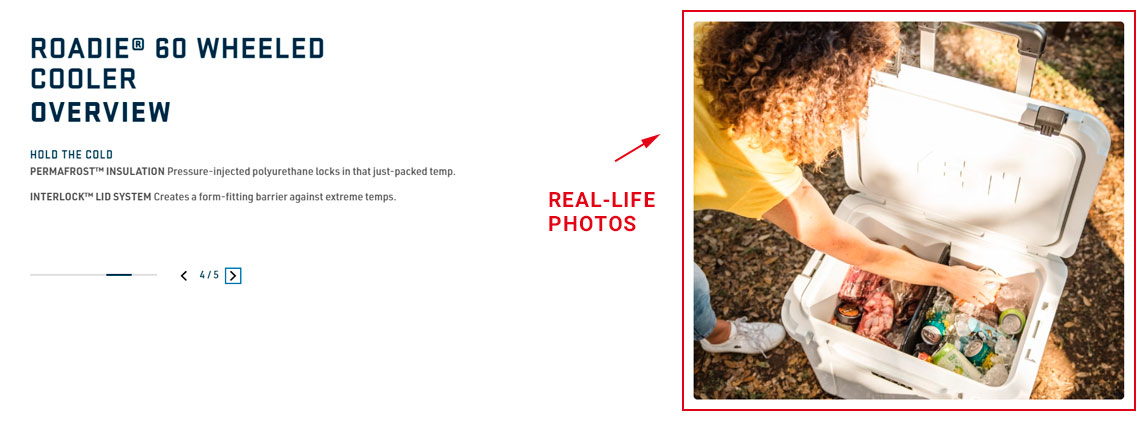
- Real-life photos
These photos allow your site visitors to see how they can use the product in real life. If you can’t make professional real-life product photos, you can go with at least high-quality studio images.
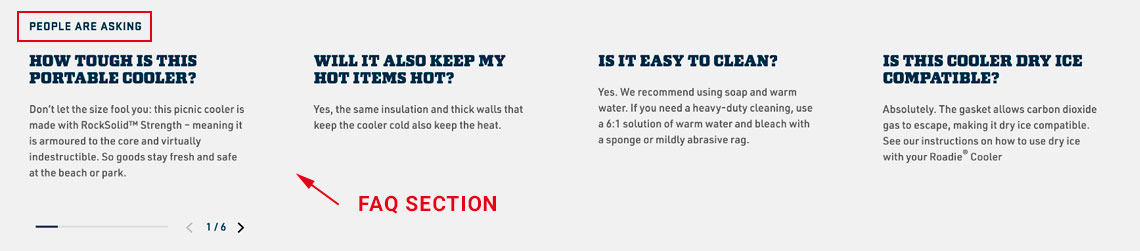
- FAQ section
This section is responsible for addressing customer concerns, while also providing answers to questions related to the product itself, its maintenance, repair, etc. As a rule, this section not only plays a marketing role but also helps to reduce the load on the online store support service. Add microdata for the FAQ section and you might get a chance to see the featured snippet in Google search results.
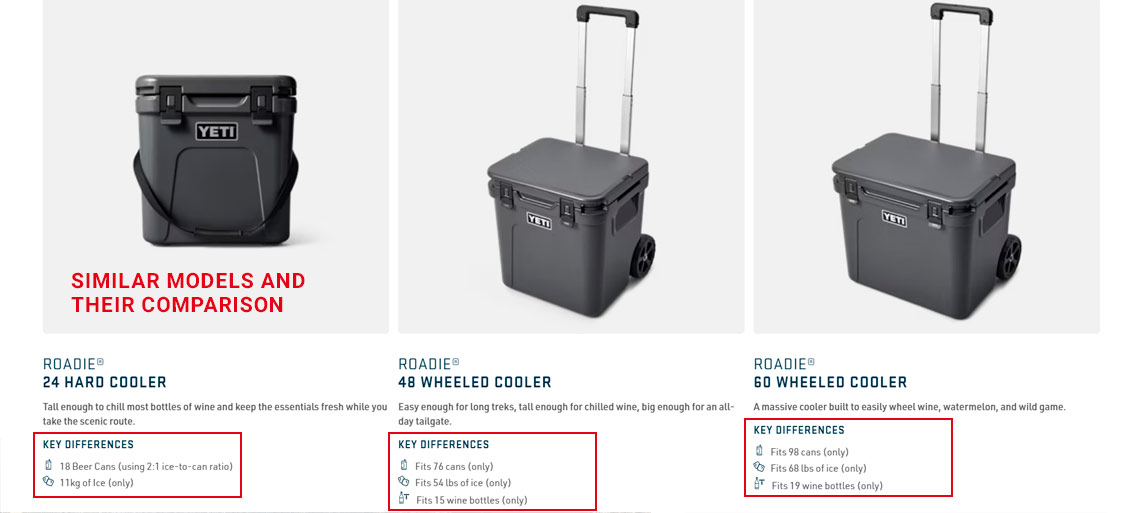
- Availability of similar models and their comparison
This tool makes it easier to understand the differences between similar products: dimensions, equipment and other characteristics that may affect the choice of customers. Give them a chance to pick from at least 2–3 options.
- Product characteristics
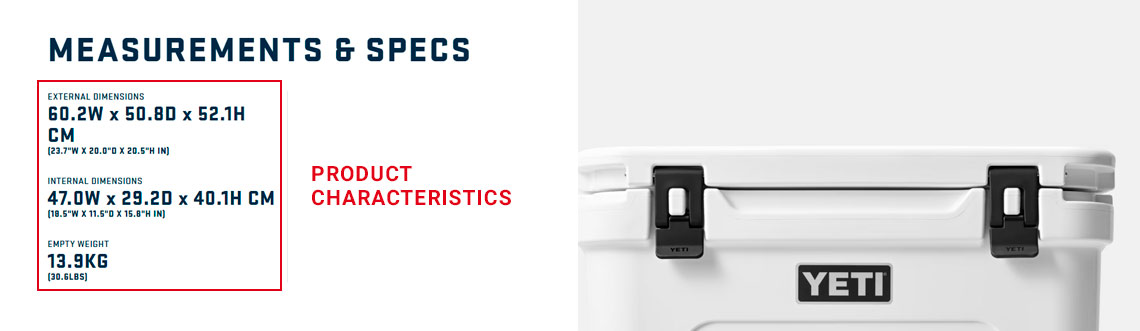
Here, you can give basic product characteristics: height, width, depth, weight, shape, and other parameters that are important to potential customers.
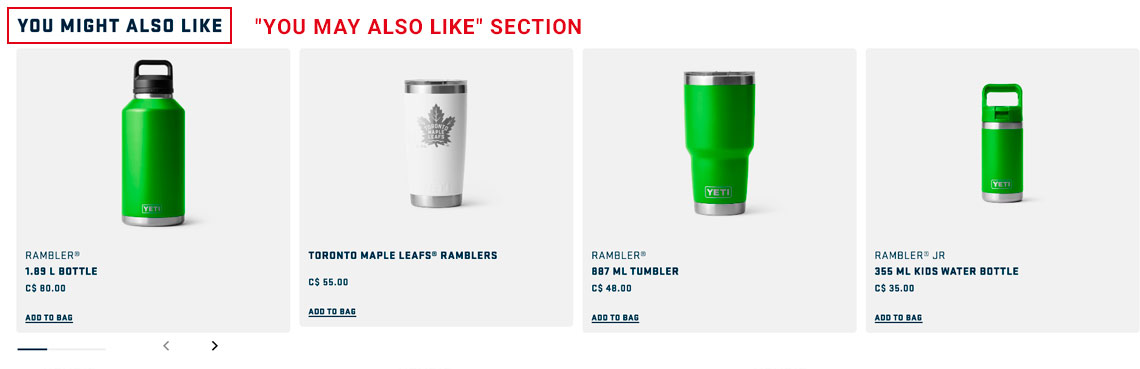
- "You may also like" section
This section can be used to promote other (not necessarily related) products from the catalog of your online store, which increases user engagement.
- User-generated content (UGC)
It's always nice when you can see real photos and videos from other buyers who also bought this product. Sure, everyone’s experience is slightly different, but the main thing here is to show what real people think of the product.

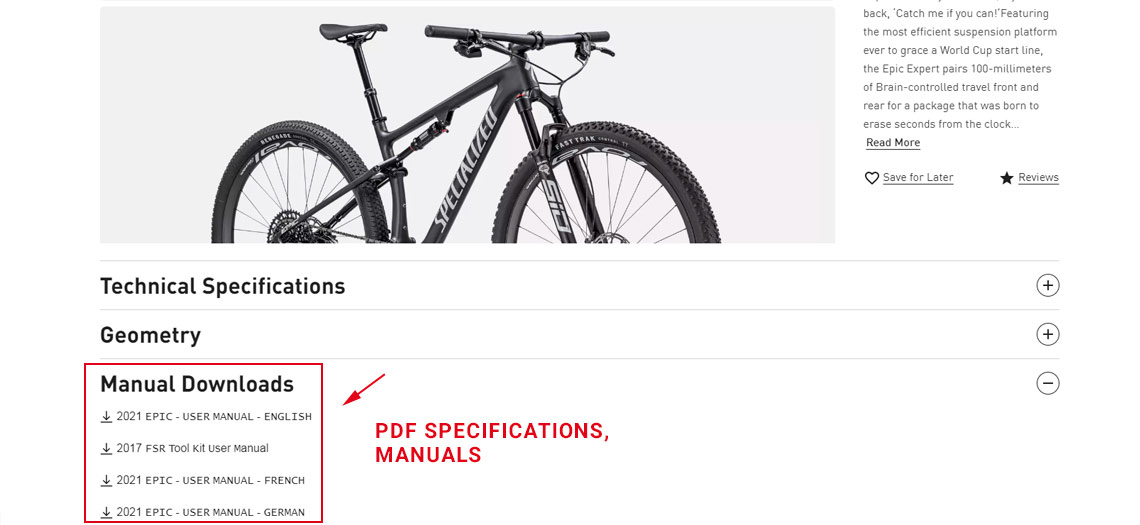
- PDF specifications, manuals
These will give your potential customers a more detailed picture of how exactly they can use a product or assemble/install it.
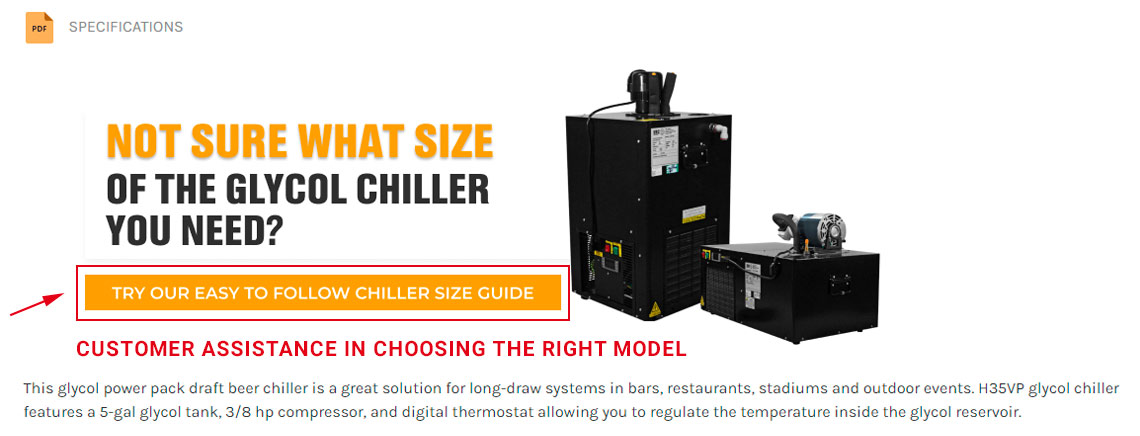
- Customer assistance in choosing the right model
This includes links to blogs, where a certain product that your site visitor took an interest in is mentioned, with a detailed description or comparison with other, similar models.
- Payment plan
Allows you to split a payment into several parts and understand how much money a customer needs to allocate for each payment. A perfect option for those who prefer to pay in installments.

- Optimize your checkout page
For example, you can offer customers different payment methods. This approach will make shopping more convenient and increase the loyalty of your customers.

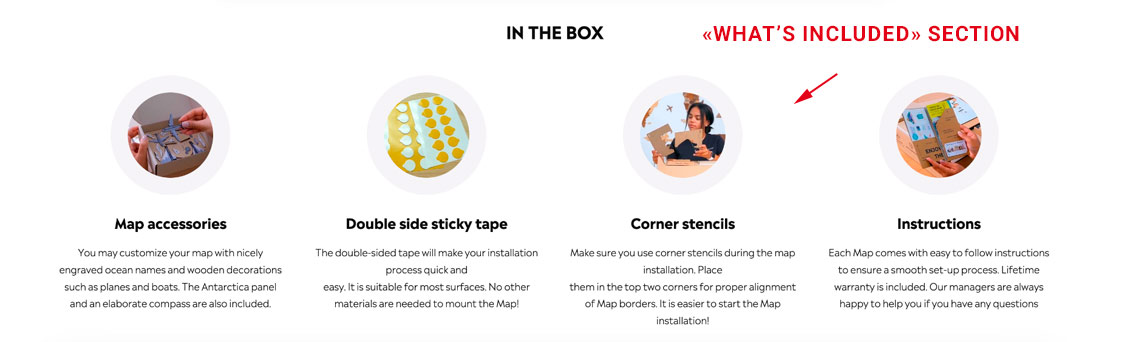
- ‘What’s included’ section
Here, your visitors can find information about what exactly is included in the set they’re interested in.
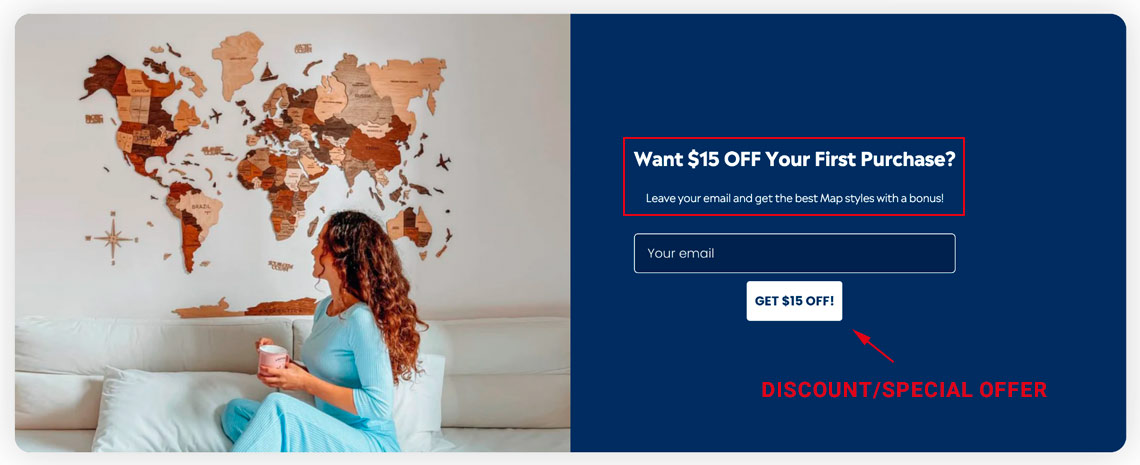
- Discount/special offer
A section with discounts and special offers that will entice the client to make a purchase from you.
- Link to visualization app
Allows your customers to get a rough idea of what the product will look like in the conditions where you are going to install/operate it.

Important note: we’re not saying you should use all of these recommendations at once, exactly the way we’ve described them. Obviously, it will be too much. Instead, choose and implement the ones that will work best for your products and your target audience.
eCommerce Conversion Rate Optimization Services by Zwebra
Want to increase the conversion rate of your online store and looking for an e-commerce agency that will analyze your site and create a roadmap with a list of necessary steps and changes? Zwebra is your best choice.
We specialize in improving website performance and increasing sales for e-commerce businesses.
Our team of experienced digital marketers will work closely with you to identify areas for improvement, including product page optimization, checkout process optimization, and improving the overall user experience.
Ready to take your eCommerce business to the next level? Book your digital marketing consultation using the form below and find out how we can help to increase your sales!
FAQ
How do you optimize an eCommerce product page for SEO?
Here are 10 tips to help you out with your eCommerce SEO strategy.
- Focus on more specific, product-related keywords (some may even include an SKU)
- Enhance your title tags and meta descriptions with the product name, model, dimensions/specs (if any), and brand
- Mark up product pages with structured data to help your brand appear in rich snippets, driving impressions and clicks
- Add an FAQ section for every product page so that your site visitors won’t have to leave the page to search for additional information, decreasing your bounce rate and increasing sales.
- Add a unique description for EVERY product on your website to take full advantage of SEO and encourage your potential customers to click on the link.
- Add genuine testimonials and customer reviews (ideally, the ones that contain more than just “10 out of 10! Would recommend”)
- Put different versions of a landing page against each other in a split test using tools like Optimizely or Google Optimize. Elements that you can test include images, videos, CTA, colors, fonts, overall page configuration, and more.
- Use high-quality video and images, add video reviews, Q&A with customers, and other multimedia content.
- Improve page load speed. The faster your page loads, the more likely your potential site visitors will stay – every second counts here.
- Conduct an SEO audit of your website to identify weak spots and potential ways for improvement.
What are the key factors of e-Commerce success?
E-commerce success is not something that can be achieved overnight. However, if you consider these factors, your chances of achieving success greatly increase.
- Use different pricing strategies to find the optimal balance between attractiveness and earnings, depending on the market and the type of products.
- Maintain a consistently high quality of the products you sell, ensuring customer satisfaction with every purchase.
- Make sure your website is accessible to people with disabilities. To do so, use high-contrast visual themes, larger font sizes, mobile optimization, etc.
- Make a lasting first impression – you only have 3 to 5 seconds to convince a potential customer that your ecommerce website is worth visiting and shopping. If not, consider this customer lost forever.
- Protect customer data and secure website connection using SSL.
- Make sure your website is not only optimized for mobile devices but offers a superior experience compared to the desktop version.
What are the three pillars of a prosperous eCom business?
The success of every eCom business is based on three simple things that complement each other and that you have to get right – here they are.
- Offer high-quality, desirable products that customers will fall in love with.
- Create effective branding to build a unique identity, setting your eCommerce business apart from competitors and leaving a lasting impression on customers.
- Make sure your website offers a superior user experience, with easy navigation and intuitive design.
Does PPC work for small businesses?
Yes, it absolutely does! As a rule, PPC works best for one-page websites due to their strong focus on a particular product/service, clear CTA, and conveniently placed web forms.
Why advertise with Google?
Google is the largest search engine and ad platform in the world. It offers almost endless possibilities in terms of targeted advertising, bringing leads and sales along with increased brand recognition.
The key point is being patient and logical with your campaign. Once you gain enough conversions, your campaign become more and more efficient.
What are the key benefits of a well-managed Google Search Ads Campaign?
Launching and managing a Google Ads campaign is not as easy as Google makes it seem to be. There are tons of nuances that you can only find out by trial and error, which usually comes with experience.
If you want to get guaranteed results, order professional PPC management services from an experienced digital marketing agency. Even though it may cost you some money, the end result is always worth it.